
The holidays are a time of quiet reflection and generosity, a season of givingand helping one’s fellow man. Of course, there is another facet of the holidayseason, too: All of those shiny gadgets displayed in store windows andpictured on Web sites highlight the attraction of upgrading to thelatest and greatest technology.
Although visions of Dells and Macs may be dancing in consumers’ heads, thoseyearning for a new machine would do well to consider some slightly out-thereoptions. For example, specialty computer company Alienware, which makes PCsfor gamers and other power users, has built its reputation on speed,coolness and customer service. But is a sleek Alienware machinereally worth its premium price?
The answer, in my opinion, is a resounding yes. After playing on anAlienware Area-51 desktop for a few days, I went back to my trustyDell with a heavy heart.
Zip, Zippier, Zippiest
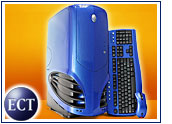
My test subject was an Area-51 computer with a 3-GHz Intel Pentium 4processor, 1,024 MB of memory and a 120-GB hard drive. It also had an AlienIcevideo cooling system, an Nvidia GeForce FX 5900 Ultra 256-MB card and aSoundBlaster Audigy 1394 sound card. The retail price, without monitor,was US$2,817. Not surprisingly, it came with a free T-shirt.
When playing games, it’s imperative to have the fastest possible computer.Although many computers can be gussied up with components that improve speed,the Area-51 comes fully loaded, so there is no need for tinkering.
On many computers, frame refresh rates are where a sluggish machine willshow its defects. A complex and dynamic game like Quake III or Unreal Tournamentrequires zippy frame refreshes, and slower machines with multiple components canrequire gamers to muck around by changing screen resolutions or tweaking otherconfigurations.
This is where Alienware comes in handy.
When playing games, the Area-51’s prowess is good enough that there’s noneed to lower graphic options or screen resolutions from their maximum settings.The machine was so speedy and consistent that it really did make other PCs lookbad.
Beyond Gaming
In addition to catering to its core audience of power gamers, Alienware recentlyhas been making a push toward the enterprise. The company may have a legitimatechance at entering the business and general consumer markets, since itsmachines’ speed makes them impressive for many applications beyond games.
Web browsing was a joy on this machine, as was using software that requiresa significant amount of computing power, such as QuarkXPress. Because of theirprice tag and reputation as gaming machines, Alienware computers may have limitedappeal for now, but their performance of routine business tasks could make themcontenders in the future.
Case in Point
To be shallow for a moment, the Area-51 also looks cool. The machine Itested had a Conspiracy Blue full-tower case, though several other colors areavailable (any color other than black will raise the price). The sleek, moldedcase is true to the company’s name, with a schwa alien face located on thelower half of the tower.
For anyone who is used to looking at a beige or gray box, a colorful case can bejarring — but in a good way. It certainly will draw comments from the scads offriends who will suddenly “drop by” once they learn you’ve got an Alienwaremachine.
Despite its eye-catching exterior, the case does have its downsides. Its shapecreates difficulty in opening and closing the box for upgrades or replacingcomponents, and some of the openings are not immediately intuitive.
Also, it would have been nice to have a FireWire port on the front of thebox, although Alienware was kind enough to put four USB 2.0 ports there. Inaddition, there are six more USB ports in the back, four free PCI slots, acouple of DIMM slots and a few open bays for additional drives. With somany connectivity options, any clumsiness in opening the box becomes aminor quibble.
Got the Money, Honey?
Of course, blazing speed and sleek looks aside, there is still the matterof the bill.
Alienware has garnered a reputation as a maker of pricey machines — but inmany ways, that reputation is undeserved. Although I could have put togethera Pentium 4 machine for less money that played games reasonably well, ratherthan stunningly well, if I had used the components that went into the Area-51I tested, the home-built machine would have cost just a little less than whatAlienware is charging. Plus, I wouldn’t have gotten the company’s famouslygood customer support.
Moreover, when compared with similar machines from other high-end gaming computermakers like Voodoo PC or Falcon Northwest, Alienware’s cost is on par. And everyAlienware computer is custom made, so budget-conscious gamers can play aroundwith configurations, possibly making sacrifices in memory or processing powerto cut down on sticker shock.
With all that in mind, take out that gift list and make room at the topfor an Alienware Area-51. You’ll thank yourself in January, when the weatherprevents travel and there’s nothing to do but learn the nuances of Battlefield 1942.
Note: The opinions expressed by our columnists are their own and do not necessarily reflect the views of the E-Commerce Times or its management.












 Loading ...






















Social Media
See all Social Media