
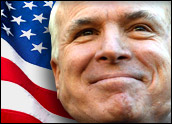
Sen. John McCain, R-Ariz., has introduced the Internet Freedom Act of 2009, legislation that would negate many of the principles underlying the concept of Net neutrality, which aims to ensure that Internet users have equal and unfettered access to all services available on the Web.
The McCain bill calls for continued unfettered competition for Internet activity, with exceptions carved out for homeland security. Its introduction follows a vote by the Federal Communications Commission on Thursday to begin developing rules that would codify earlier guidance on Net neutrality.
The two-page notice the FCC issued is the focal point for an initial public comment period that will last until January 14, 2010, when the first round of comments are due to be filed. Replies to those comments must be submitted by March 5, 2010.
'No Chance in Hell'
Proponents of Net neutrality also have offered bills in Congress, noted T. Barton Carter, a law professor at Boston University.
Whatever regulations the FCC might impose could be altered through the legislative process.
"Congress could change something that the FCC did that it didn't like," Carter told the E-Commerce Times, since the FCC's authority is bestowed by the legislative branch.
However, it is unlikely McCain's bill will go anywhere, said Frost & Sullivan Program Manager Mike Judd.
"It doesn't stand a chance in hell in fact," he told the E-Commerce Times. "It is a political statement. McCain is saying that Net neutrality is a bad thing, and he wants to go on record with that opinion."
Even if such a bill were to pass the House and Senate, Judd noted, the Obama administration came into office "drawing a line in the sand about Net neutrality. It is an important issue to the president."
Open Language
Based on the content of the FCC's Thursday notice, it appears McCain's bill might be overreaching. Some of the language of the principles outlined in the document appears to have been designed specifically to mollify opponents of Net neutrality.
For example, FCC Chairman Julius Genachowski calls for flexibility in allowing broadband providers to manage their networks, and he suggests limiting the government to a "modest" role in preserving openness.
"The goal is to provide a fair framework in which all participants in the Internet ecosystem can operate, ultimately minimizing the need for government involvement," he says.
The rules' application may be different for wireless and wireline providers, he suggests -- a position that the wireless industry has been fiercely advocating.
Other principles outlined in the notice include preserving a free and open Internet, and promoting both investment and innovation. It also emphasizes the need for secure and transparent network management practices.Just Politics?What the FCC's eventual rules will look like is anyone's guess -- but some industry observers warn against reading too much into the notice's conciliatory language.
"It is clear that three of the commissioners are looking to craft strong rules," Carter said. Those three are the commissioners appointed by Democrats. There are also two Republican commissioners; a majority vote is required to establish a rule.
"Right now, the FCC is seeking public comment," Carter said, and "this is just an opening for that." The FCC may have adopted a softer tone toward the opposition because it "didn't want to make it look like a train was ramming through."
The Commission has taken unusual pains to acknowledge that it recognizes there are legitimate reasons for providers to manage their networks, Judd said.
How its accommodating language will be received by disgruntled telco players remains to be seen -- although Judd isn't expecting much enthusiasm.
"They understand new rules represent a new overhead associated with their business," he commented.
There are legitimate concerns for Net neutrality, Judd added, "but most industry believes that whenever rules are expanded, it cannot be a good thing."










 Loading ...






























The Internet Freedom Act (IFA), is just another thing for the government to get their foot into the use of a marketing media to which they have yet to find a way to attain supremacy. For years the promise of the United States’ main principal "Freedom of Speech" has been put under the microscope of federal agencies and senators. Our Freedom of Speech has been reduced to being free ONLY if we the people allow those in office to run the country how THEY want and turn a blind eye when they want us to.
I AM just a regular citizen, I have no speculations about conspiracy or the like at all. I believe that if anyone should be allowed to put guidelines on the internet it should be those who are directly involved with the coding and programming. Politicians have NO right to put rules on a global access point. They CAN however put more restrictions on government databases and information.
I AM not a registered voter mainly because the citizen’s votes are no longer what matter. While I was in Japan during my time in the military, the Washington State governor election ballets were held. Three times the votes were counted, and twice our current governor lost the polls. On the third count however she won, then governor Locke said "The winner is…" because Locke was of the same political party as the current Governor. Later it was found out that ghost votes had been entered during the last recount which has been illegal for the past several generations. Instead of booting her out of office (like many Washington citizens wanted her to be)and giving it to the "true" winner of the polls, she was allowed to stay in office.
Whether or not what I AM saying makes any sense to anyone or not does not matter. If I get a knock on my door by someone who has NO right to be at my house it will be known. I have no interest in politics or anything else that many of us mistrust, I AM only saying what needs to be said and what many are afraid to.
One voice may be easily silenced, but when hundreds cry out the world changes.