

Nothing is as heart-wrenching to an e-tailer as watching a customer abandon a full cart just seconds before consummating the deal. To be so close yet so cashless is more than frustrating; it’s harmful to an e-tailer’s health. A virtual armory of tools are in use to woo, cajole, prompt and push consumers to make the buy — but are they working, or are they turning even more customers away?
“Most fall woefully short,” Matthew Brown, senior director of e-commerce and interactive marketing at MarketNet, told the E-Commerce Times. “Instead of focusing on using tools and technologies to help the customer, much more thought and time needs to go into Web site architecture in the first place.”
Unmasking the Problem
Many theories are being tossed about as to why consumers turn fickle a hair short of the finish line. For each theory, there are a multitude of technological solutions.
“Many options exist, and some e-commerce companies are using a combination of technology, policies and incentives to address the issue of shopping cart abandonment,” Pete Olson, vice president of product management at Amadesa, told the E-Commerce Times. “Many of these solutions, however, mask underlying problems with the core customer experience.”
If the technology deployed does not address the underlying problem, the results will be minimal. Is there a way, then, to reliably identify the problem?
“Retailers continue to launch and test technologies and features aimed at reducing abandonment or [increasing] online conversion,” Jessica Ried, a director of retail strategy at Resource Interactive, told the E-Commerce Times. “In our experience, it is difficult to know for sure if any particular one is going to be effective for a given retailer without testing it with that retailer’s customer base, or at least having a solid understanding of existing customer behaviors on the site through site analytics [and] surveys.”
The Tools in the Box
Once an e-tailer understands the true obstacles to closing the deal, there are a range of tools available to clear the way to bigger profits. The most commonly deployed are live chat, pop-up discounts and follow-up email programs; some are achieved through the standard use of cookies, others via pixel-based triggers.
Third-person endorsements are also frequently used.
“Hosting consumer-generated content such as ratings and reviews has typically allowed retailers to improve conversions,” explained Ried, “as customers are more confident with their selections. [That’s] because they have access to an ‘unbiased’ opinion, building trust rather than having to rely solely on the marketing copy on the retailer’s site.
“Linking out to expert reviews, such as Best Buy’s links to Cnet content, may make more sense for highly technical purchases,” she said. “Affinity-based reviews may be more important where lifestyle [or] preferences have a big effect on perceptions — for instance, singles versus families looking for vacation spots.”
Beyond these approaches, new ones are evolving. Latest up to bat: video.
“Online Video is growing rapidly, but people are still trying to figure out how to use it,” Ken Price, president and CEO of ShopWatchBuy.com, told the E-Commerce Times. “From an e-commerce and conversion perspective, streaming videos are most common. However, Live can be great to coordinate product demos or shows.”
What Works
“We use Liveperson chat extensively. It has been an incredible tool for answering any last-minute doubts during the last few states of the transaction,” noted Adrian Salamunovic, cofounder of DNA 11, a multimillion dollar e-commerce art retailer.
“Our average transaction is over US$500, so this is very important to us,” he told the E-Commerce Times.
“It pays for itself many times over each month,” Salamunovic added. “For us, interrupting the client with pop-ups or invitations to chat really doesn’t work — in fact, it does the opposite. We’ve watched customers bounce (exit) quite quickly after being interrupted with pop-ups.”
DNA 11 also uses an automated email process to follow up with clients that abandon purchases or who experience a failed transaction, said Salamunovic.
However, that is not to say that one e-tailer’s success is transferable to another. There is no one-size-fits-all solution to be had.
“Consumers react to some of these techniques differently across different sites,” said Rahul Mutha, chief executive officer of TalentBeat, a provider of e-commerce, payment and CRM solutions.
“What we have seen is that it is not the technology that is critical here, but rather ensuring the experience of the consumer is rich,” he told the E-Commerce Times.
It’s Personal, Not Just Business
Therein lies the conundrum. No two customers are identical. At least some personalized customization is essential.
“The value of a customized offering is a differentiator that has shown to be worth the investment,” said DJ Edgerton, chief executive officer of Zemoga, a mid-sized interactive development firm that recently launched the redesign of Sears.com and Kmart.com.
“There are creative ways to make the customer feel that they have a unique custom option to buy, without major manufacturing retooling,” Edgerton told the E-Commerce Times. “It’s the experience you present.”
There are also a number of ways to calculate what might entice the customer back to the sale.
“Cart data is actually super-useful,” Vince Collura, partner at Team5 Corporation, told the E-Commerce Times.
“You can use it for post-site fire sales — meaning to contact the user after they leave the site offering a discount on certain items that are in their cart — and to analyze common cart combinations to create new site deals and packages,” he said.
“Retailers often think they know what consumers want in the way of package deals, but they often have it wrong,” explained Collura. “A close look at abandoned and purchased cart data can help you put together user-generated packages that sell better.”
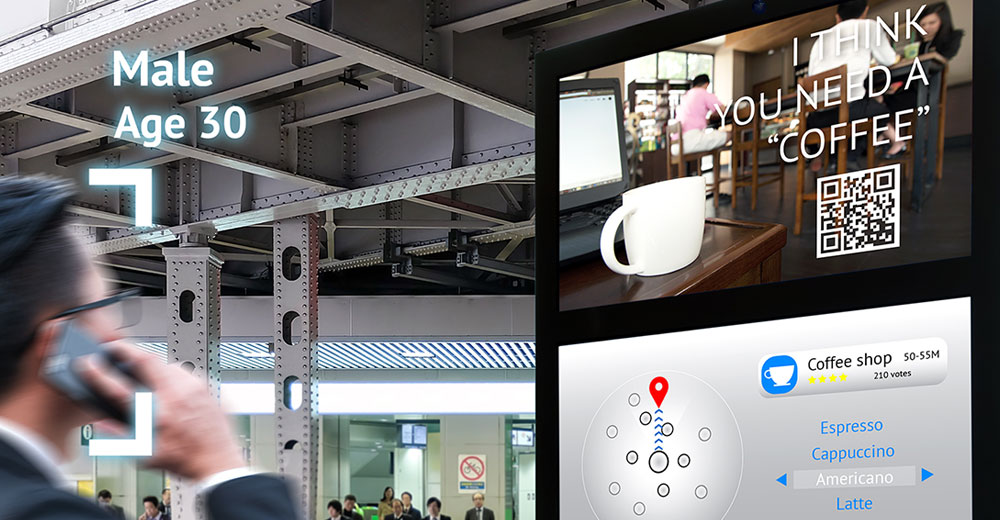
There is a point, however, at which actions considered helpful by the retailer are perceived as intrusive by the consumer.
“Some customers welcome the help; others are unnerved by the Big Brother effect it can suggest,” said Resource Interactive’s Ried. “Start by considering what is known about consumer behavior in evaluating which technologies, features and functionalities to explore first.”




















 Loading ...






























I’ll tell you what makes me abandon a cart.
1) if ANY of the items are not in stock , backordered or no estimated ship date is noted.
2) If the shipping is not made known in advance…policies should be spelled out. I will spend little time digging in to see what shipping costs will be.
3)I often abandon what I deem outrageous shipping charges which were piled on top of a loss leader "come on price" of the item. Often I can simply go to a local retailer for less.
4) If no customer service phone numbers are offered. Buy.Com lost my business because , after a couple of mistakes on their orders, I could not get anyone to take care of the problem for over 1 week!!
E-tailers should remember, the consumer is taking a risk going online to buy an item. Is the site genuine? Is it secure? Is the price with shipping worth the risk of doing business with them? If the answer is not absolutely yes….you will not see my order!
Pam,
I would love to chat with you on what ISQ Online is prototyped to cahnge the shopping experience and impact the conversion rates …. feel free to email me at [email protected]
shevy67 can u tell me who yiou have seen that adopted real-time? …I agree it is the holy grail and i think my startup is working on the "perfect solution"
Regards
Shopquack
We are hearing more and more about realtime! Twitter, now facebook and youtube just announced that your friends can see what videos you are watching while you watch.
I always leave things in my cart because I need to see if my husband thinks it will work in our living room or if he thinks it is the right model/color/whatever. By the time he reads my email and responds, I AM off to the next purchase.
A few retailers have adopted realtime, but it seems like novelty still. Isn’t it the holy grail?