
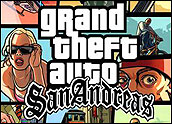
More than two years after the filing of the first complaint, Take-Two Interactive Software announced Friday the proposed settlement of all U.S. consumer class action lawsuits over the “Hot Coffee” modification that could be used to enable sexual content in its “Grand Theft Auto: San Andreas” video game.
The settlement stipulates that class members will be able to claim benefits if they swear that they bought a copy of the game before July 20, 2005; were “offended and upset” by the ability to alter the game’s content using the Hot Coffee modification; would not have bought the game had they known about the possible alteration ahead of time; and would have returned the game if they thought they could.
If approved by the U.S. District Court for the Southern District of New York, possible benefits range from an exchange of the game disk for an edited, sex-free copy to a cash payment of up to US$35 for consumers who submit detailed proofs of purchase.
Putting the Matter to Rest
“If the case had continued, we believe the court would have agreed that Take-Two was not liable for consumers acting independently to modify their games with third-party hardware and software to access normally inaccessible content,” said Ben Feder, CEO of Take-Two. “Nonetheless, we believe it is in the best interest of the Company to avoid protracted and costly litigation to prove our case and to finally put this matter behind us.”
Take-Two and its Rockstar Games subsidiary settled with the Federal Trade Commission last year in a lawsuit over the same Hot Coffee modification. At issue in both cases is content that was not visible in the unmodified version of the game, but that became enabled by Hot Coffee, a third-party program readily available online.
Specifically, whereas in the unmodified version players of the game could hear only hear muffled voices having sex, the modified version allowed players to see two characters engaging in sexual intercourse and to control their actions. The release of a modified version for the PC led to the discovery of the content on versions for the PlayStation 2 and Xbox as well.
A Costly Mistake
Take-Two and Rockstar originally denied including the content in the best-selling game, but it was ultimately traced back to them. It cost almost $25 million to re-rate and re-release the game without the offending code.
Now, in settling the class action suit, Take-Two has reserved at least $1.02 million for settlement benefits. The actual value of cash payments made to consumers will depend on the number of class members that apply, the company said.
This case is reminiscent of the revelation years ago that animators for Disney’s “Who Framed Roger Rabbit?” movie had rendered Jessica Rabbit a bit more realistically than a G movie-rating would allow, technology attorney Raymond Van Dyke told the E-Commerce Times.
“It was all as an inside joke, but corporate management was not amused, and the offending frames were removed,” Van Dyke pointed out. “Now, the ‘Grand Theft Auto: San Andreas’ game software apparently contained hidden code that could be unlocked, likewise apparently an inside joke of the programmers,” he said.
“Presumably there will be a number of parents asking for this settlement, as well as at least one grandmother who brought the suit,” Van Dyke added. “But I suspect few young men will apply.”
No More Hide and Seek
The lesson behind the case is that publishers need to be careful not to hide content on game disks, Ted Pollak, senior analyst for the gaming industry with Jon Peddie Research, told the E-Commerce Times.
Rather, if they want to include explicit material, it needs to be labeled appropriately, he said. “I think the content in movies is a perfect guide for what can be available in games,” with the ratings and restrictions labeled accordingly, he explained.
The case also highlights a double standard that exists in consumer attitudes toward sex and violence, Pollak added. Particularly for games such as “Grand Theft Auto,” in which “you can murder prostitutes and shoot cops,” it’s “kind of ironic that people are upset about being exposed to sex,” Pollak said. “Which is more morally offensive?”












 Loading ...






















Social Media
See all Social Media