
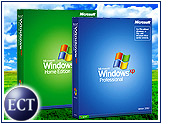
The Microsoft-versus-Linux skirmish has heated up discussions about how much a company should pay for servers, software and operating systems. In addition, the harsh economic climate has forced many companies to cut costs, so they are taking a long, hard look at licensing agreements, general ease of use and security — and they are considering Linux more seriously than ever before.
How much impact has the free-versus-fee debate had in the halls of Microsoft’s Redmond headquarters? And might the software giant, threatened by Linux’ incursions on its territory, someday decide to give away Windows to mitigate the Linux threat, much as it gave away Internet Explorer to squash Netscape?
Strategy Session
Microsoft is not shaking in its boots yet, according to analysts, and any price concessions are likely to be few and far between.
Still, the idea of making Windows available for free is an intriguing one.If Microsoft gave away its OS and charged only for software that runs on top of it, such as Office, it might be able to quash at least some of the Linux momentum.
Also, making the current version of the OS free could increase XP adoption and motivate users to upgrade from older versions of Windows. The end result might be to get all Windows users on the same platform — a situation that would relieve tech support departments around the world. Following such a widespread upgrade, sales of newer versions of Office also might spike, further increasing standardization and offsetting revenue losses on the Windows side.
The need to bolster users’ confidence about upgrading from Windows 2000, or even older versions like Windows 98, is palpable. In a report on his upgrade experience, Aberdeen Group analyst Peter Kastner wrote, “Although we give considerable credit to Microsoft for bulletproofing the actual upgrade, our experiences in preparing for the upgrade were considerably more arduous than expected.” Making the upgrade free could reduce the risk involved and make companies more willing to take the plunge.
Goliath’s Footprint
So, why isn’t Microsoft considering freeing XP? Most likely, the reason is that the software giant is making plenty of profit and sees no need to change a successful formula, even if doing so would benefit the IT community as a whole.
“XP is a desktop operating system, and Microsoft has more than 90 percent of that market,” IDC analyst Jonathan Gaw told the E-Commerce Times. “It faces virtually no threat in the PC client OS market, from Linux or anyone else.”
Gaw added what he would do if he ran Microsoft: “Heck, if anything, I’d raise prices.”
Limited Movement
Also, it is possible that even if Microsoft wanted to give away XP, doing so would not be an option.
Yankee Group senior analyst Dana Gardner told the E-Commerce Times that Microsoft’s Internet Explorer giveaway marked one of the only times the company has taken such a step. Even then, he noted, the decision likely was made because IE was not generating any revenue.
With XP, the free-versus-fee decision is not so clear-cut.
“For one thing, they’d be taking revenue away,” Gardner said. “There’s no good rationale for doing that. Secondly, if they did make it free, the anticipated revenue drop would make their stock go down dramatically.”
Such a move also could hurt Microsoft in other ways, Gardner noted. “If they … just gave away the client to make money on Office, it could be in violation of the spirit of their antitrust agreement.”
Penguin Hunting
Rather than changing its licensing model and inviting a slew of unnecessary problems, Microsoft instead might turn its attention to battling Linux on the server front, according to Bill Claybrook, research director at Aberdeen Group.
“On the low-end server side, Microsoft has lowered its cost of licensing to try and compete directly with Linux,” Claybrook told the E-Commerce Times. “If they can stay competitive with Red Hat, pricewise, then it makes it difficult for Red Hat when they go head to head with something like the Windows 2003 enterprise edition.”
He added that despite its decision to lower server license costs, Microsoft has not been terribly wounded in its scuffles with Linux.
“It’s not like they aren’t doing okay right now,” he said. “It’s just that with this change in pricing, they can do even better.”
No Free Lunch
Microsoft also is urging customers to view its OS in terms of total cost of ownership, rather than initial licensing cost.
As Pat Fox, director of the Windows Client Business Group at Microsoft (Nasdaq: MSFT), told the E-Commerce Times: “A common perception in the industry today is that because Linux is supposed to be ‘free,’ it will provide a lower total cost of ownership. However, recent data helps us to reexamine that perception.”
Drawing on recent analyst reports, Fox noted that the retail price tag of software represents only a small percentage of its total cost. Factors like application availability, performance and long-term support are more important to IT managers.
Add All Costs
Also, because some Linux vendors have begun to sell service and support contracts, the word “free” describes only part of their offering.
“With Linux vendors now offering supported products that are similar in cost to their equivalent commercial offerings, the perception that Linux is free is quickly disappearing,” Fox said.
Given the breadth of reasons why XP comes with a price tag, it seems unlikely that Microsoft will change that model anytime soon. However, the Redmond giant is by no means allowing Linux to move forward unimpeded — it is fighting back with all the resources at its disposal, and the penguin faces a tough battle.























 Loading ...





















I believe MS should charge more for WXP Pro, less per license, and make a free version of WXP.
WXPFree would boot the computer and not much more, and would require no activation. It would be great for AV workstations and other applications where much crap would be stripped out as best as it can be, anyway. Networking, IE, games, etc., would be available for a fee. This could be embedded into the motherboard, or even in the CPU.
In trying to be all things to all motherboards, MS has made WXP bloated and less stable than it needs to be.